

Going from the best draft in franchise history in 2020 to potentially the worst would be very on brand for the Ottawa Senators, and that is exactly what the 2021 draft was.
The 2021 NHL Draft saw the Senators picking in the top 10 once again, with the opportunity to add another cornerstone piece to a young roster that was beginning to take shape. At the time, Ottawa already possessed a wealth of high-end talent and appeared poised to strengthen its core even further. Heading into draft night, there were numerous directions the organization could take, with several highly regarded prospects expected to be available when the Senators made their selection. One of the most commonly discussed possibilities was Swedish goaltender Jesper Wallstedt.
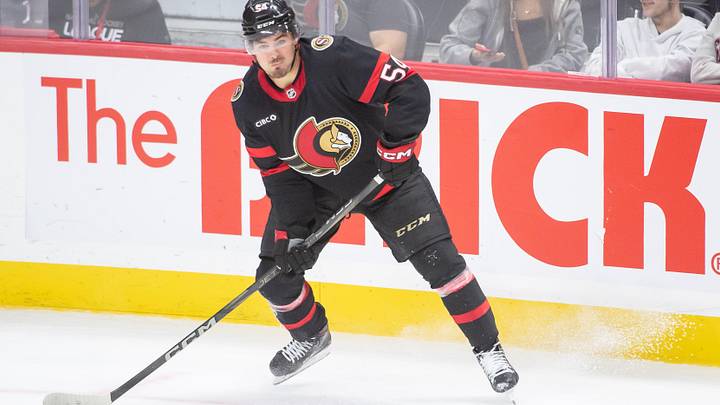
When the Senators' pick was announced, the reaction was immediate and, for the most part, overwhelmingly negative. Ottawa selected rugged forward Tyler Boucher, the son of former NHL goaltender Brian Boucher, with the 10th overall pick. The selection was considered a major reach at the time. Boucher had appeared in only 21 games during his draft season and was still viewed as a raw and unproven prospect. The criticism only intensified when looking at the players selected immediately after him.
Cole Sillinger went 12th overall after recording 46 points in 31 games during his draft year and quickly established himself as a full-time NHL player. Matthew Coronato, selected 13th overall, posted 85 points in 51 games during his draft season and has also become a full-time NHLer. As mentioned previously, Jesper Wallstedt was selected 20th overall and has since emerged as the Minnesota Wild's goaltender of the future, earning the starting role during the Minnesota Wild's 2026 playoff run over former Senators netminder Filip Gustavsson.
Unfortunately, the Boucher selection marked the beginning of what would become a very disappointing draft class for Ottawa. In the second round, the Senators selected Zach Ostapchuk, who has ultimately become the most successful player from Ottawa's 2021 draft class. Ostapchuk has appeared in 122 NHL games and was traded to the San Jose Sharks as part of the deal that brought Fabian Zetterlund to Ottawa. While Ostapchuk is no longer with the organization, the asset still contributed to improving the Senators' roster.
Later in the second round, Ottawa selected Ben Roger, a 6-foot-4 physical defenceman; that selection too was criticized as it was mostly considered a reach. Roger was ranked the 74th North American Draft eligible prospect, which would have him ranked between 90th to 110th in the overall skater rankings. Roger was never signed to an entry-level contract, and the Senators no longer hold his rights. Notably, just eight picks later, the Toronto Maple Leafs selected Matthew Knies, who has since developed into one of the NHL's more effective young power forwards.
The remainder of the draft followed a similar pattern. Oliver Johansson, Carson Latimer, and Chandler Romeo were selected in the third, fourth, and seventh rounds, respectively. Johansson currently plays in Sweden's HockeyAllsvenskan, Latimer is playing NCAA hockey at Michigan Tech, and Romeo now plays senior AAA hockey in the Allan Cup Hockey League. As of right now, Boucher is the only player selected in this draft that is still connected to the Senators organization. All other players were not offered entry-level contracts and thus no longer hold their player rights.
To be fair, the 2021 draft was one of the classes most heavily impacted by the COVID-19 pandemic. Players faced lengthy interruptions to their development, schedules were disrupted, and scouts had fewer opportunities to evaluate prospects in person. Teams across the league struggled with uncertainty, and many draft boards looked significantly different than they would have under normal circumstances. That context, however, doesn't completely excuse what appears to be a significant miss by Ottawa. Generally, teams use later selections on long-term project players, particularly those with limited track records. Boucher was viewed by many evaluators as a projectable bottom-six forward, and even that projection has yet to materialize at the professional level.
As we approach the five-year anniversary of this draft, Tyler Boucher still looks like a project who may never become the player he was drafted to be. With any top-10 selection, there is always some inherent risk in the outcome. Just look at players such as Alex Turcotte, Cody Glass, Vitali Kravtsov, and Lias Andersson, all of whom fell short of expectations and never developed into the players they were projected to be. The difference is that each of those players generated significant buzz leading up to their draft year, and their body of work justified being selected that high. In Boucher's case, however, nothing in his pre-draft résumé suggested he was a top-10 talent, let alone a first-round pick.
As the Senators continue to explore the market for backup goaltending options behind Linus Ullmark, it's difficult not to wonder what the future might have looked like had they selected Wallstedt instead. A goaltending tandem featuring both Ullmark and Wallstedt could have provided Ottawa with stability in net for years to come.
 Add us as a preferred source on Google